Featured

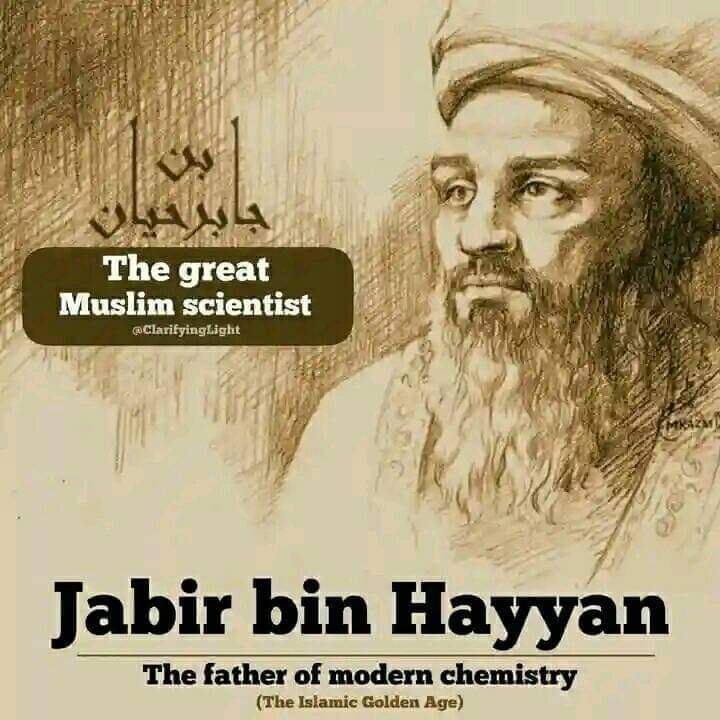
The Father of Modern Chemistry:Abu Mūsā Jābir ibn Hayyān is thought to have been born in Tus, Persia (modern day Iran). Jābir – whose name is commonly latinised to Geber in the west – was a polymath: a chemist and alchemist, astronomer and astrologer, engineer, geographer, philosopher, physicist, pharmacist and physician.Jābir proposed the mercury-sulfur theory, whereby metals differ from one another due to their varying proportions of sulfur and mercury. Unlike the elements we think of today, these names referred to certain principles, for which the element was the closest approximation in nature; sulfur characterised combustibility, and mercury metallic properties. Jābir wrote “the metals are all, in essence, composed of mercury combined and coagulated with sulphur… they differ from one another only because of the difference of their accidental qualities”.The use of experimentation in chemistry was Jābir’s greatest legacy. He is credited with using over twenty types of now basic chemical laboratory equipment, including the alembic and retort, and also describing many chemical processes, including crystallisation and distillation. He is believed to have discovered aqua regia, a mix of hydrochloric acid and nitric acid, which has the ability to dissolve gold, in the process of helping to justify alchemists’s search for the philosopher’s stone. Jābir also introduced several technical Arabic terms, such as Alkali , into the scientific vocabulary.It was Jābir’s recognition that experiments are vital to science that transformed the mystical practice of alchemy into what would become modern chemistry.
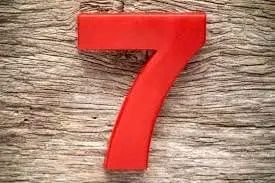
Lakkoofsi Hayyootaa Ajaibsiise lakkoofsa 7 dha!Innis Ogummaa Rabbiiti (Rabbiin Qulqullaawee ol-tahe!)#Samiin 7Lakkoofsi ardiilee addunyaa 7 dhaLakkoofsi takbiiraa Iida lamaanii 7Guyyoonni torbanii 7Xawaafni naannoo Kaabaa 7Aayaatni(keeyyatni) Suuratu Al-Fatihaa 7Fiigichi Safaa fi Marwa gidduu 7Warri #Rabbiin guyyaa qiyaamaa gaaddisa godhuuf 7Balbaloonni ibiddaa 7Baay’ina galaanaa 7Laayiyeroota Lafaa 7Ajaa’iba addunyaa 7Ijoolleen Umurii waggaa 7tti salaatutti ajajamu. Albuudota lafaa gurguddoo 7Gosoonni urjiilee bu’uuraa 7 dhaSadarkaan orbitaalaa elektiroonii 7 dhaRaadiyeeshinii ifa hin mul’anne 7Lakkoofsi jechoota shahaadaa 7 ta’uu hubattee?Atiis kan hafan itti dabaluu dandeessa…

Pirezidanii Somaaliyaa Hasan Sheek Mohaammad18 Bitooteessa 2025Hidhattoonni Al Shabaab konkolaataa Pirezidantii Somaaliyaa Hassan Sheek Mohammud magaalaa guddoo biyyattii Moqaadishoo keessa boombiin haleeluuf yaalanis Pirezidantichi ooluun gabaafame.Pirezidantichi Kibxata har’aa osoo magaalaa keessa deemaa jiranuu haleellaa boombii konkolaataa isaanii irratti xiyyeeffachuun raawwachuu gareen gareen kun beeksisuu maddi oduu Rooyitarsi gabaase.Haata’u malee, fuulli tiiwitara pirezidantichaa kan ta’e ‘Villa Somalia’ ammoo Pirezidanti Hassan Sheek Mohaammud, ajajaan Olaanaa, tarkaanfii shororkeessitoota idil-addunyaa dhabamsiisuuf kaayyeffate gaggeeffamaa jiru hoogganuu fi cimsuuf adda waraanaa Aanaa Adan Yabal daawwachuu beeksiise.Itti dabalunis, boodarra ammoo Pirezidaantichi hojii duula haaraa naannoo sanatti gaggeeffamaa jiru gamaaggamuuf hoggantoota waraanaa olaanoo waliin ni mari’atus jedhe barreeffamni kun.Qondaaltonni olaanoo mootummaa fi waraanaa lama, Pirezidantichi haleellaa jedhame kanaan booda nagaa ta’uu isaanii Rooyitarsiitti himan.Gorsaan pirezidantichaa Zaakaariye Huseen ammoo barreeffama toora X irratti barreessaniin, pirezidantiichi ”nagaa fi gara adda waraanaa jiraachusaanii” barreessan.Loltoonnii fi jiraattonni naannoo haleellaa jedhame kun itti raawwate ijaan argan ammoo konkolaataan pirezidaantichaa rukutamuu mirkaneessusaanii Rooyitarsi gabaaseera.Gaazexeessaan Rooyitars bakka sanatti argamu tokko haleellaa naannoo masaraa pirezidantichaatti raawwatameen reeffa namoota afur ajjeefaman arguutu gabaafame.

THE FOUR QUESTIONS PROPHET MUHAMMAD (SAW) ASKED HIS FOUR KHALIFS BEFORE HE PASSED AWAY.The Prophet of Allah (may Peace and Blessings of Allah be upon him) sat with his companions (may Allah be pleased with them).HE ASKED THEM STARTING (WITH Abu Bakar): What do you love in this world?He replied:👇🏼I love three things in the world:a. Sitting with you,b. Looking at your face,c. spending my wealth over you.AND YOU, O OMAR: WHAT DO YOU LOVE IN THIS WORLD?He replied:👇🏼I love three things in the world: a. Enjoining goodness even if it is in secret,b. Forbidding evil even if it is in public,c. Speaking the truth even if it is bitter.AND YOU, O UTHMAN: WHAT DO YOU LOVE IN THIS WORLD?He replied:👇🏼I love three things in the world:a. Feeding the poor,b. Spreading salam; “asalam ul alaikum”,c. And praying at night while people are sleeping.AND YOU, O ALI: WHAT DO YOU LOVE IN THIS WORLD?He replied:👇🏼I love three things in the world:a. Honouring the visitor.b. Fasting during the summer.c. And striking the enemy with sword.HE THEN ASKED ABU DHAR AL GIFARIY: WHAT DO YOU LOVE IN THE WORLD?He said👇🏼 I love three things in the world:a. Hunger,b. Sickness,c. And deathTHE PROPHET, MAY PEACE AND BLESSINGS OF ALLAH BE UPON HIM, ASKED: But why ?Abu Dharr replied:👇🏼a. I love hunger in order to soften my heart.b. I love sickness in order to lessen my sin.c. And I love death in order to meet my Lord.AT THAT TIME, ANGEL JIBREEL, MAY PEACE BE UPON HIM, DESCENDED FROM THE HEAVENS AND GREETED THEM WITH “ASALAM UL ALAIKUM”, AND SAID:👇🏼 I love three things in your people’s world: a. Conveying the message,b. Delivering the trustc. Loving the needy.HE THEN ASCENDED TO THE HEAVENS AND DESCENDED ONCE AGAIN AND SAID:👇🏼Allah, the Most High and the Grandeur, is greeting you with “Asalam ul alaikum”, and He, Allah, said:👇🏼He loves three things in your people’s world:The tongue that is full of:a.

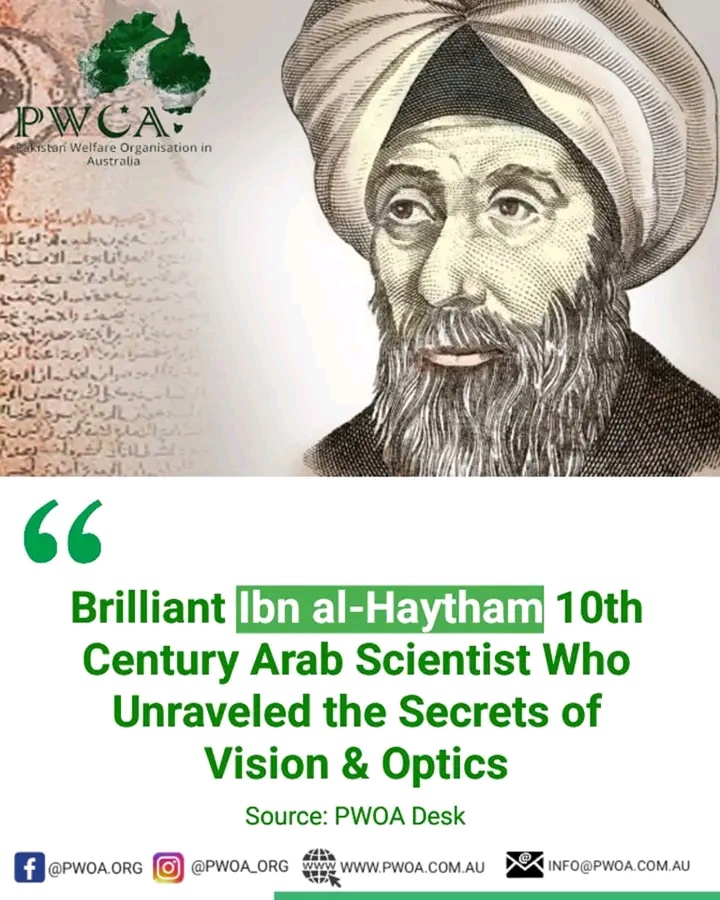
Brilliant Ibn al-Haytham 10th Century Arab Scientist Who Unraveled the Secrets of Vision & Optics.

#PWOA
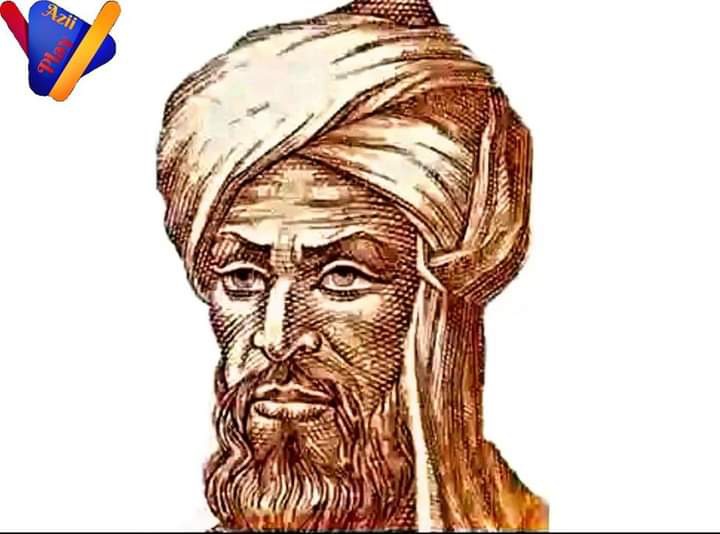
𝐌𝐚𝐭𝐡𝐞𝐦𝐚𝐭𝐢𝐜𝐢𝐚𝐧 𝐨𝐟 𝐭𝐡𝐞 𝐝𝐚𝐲
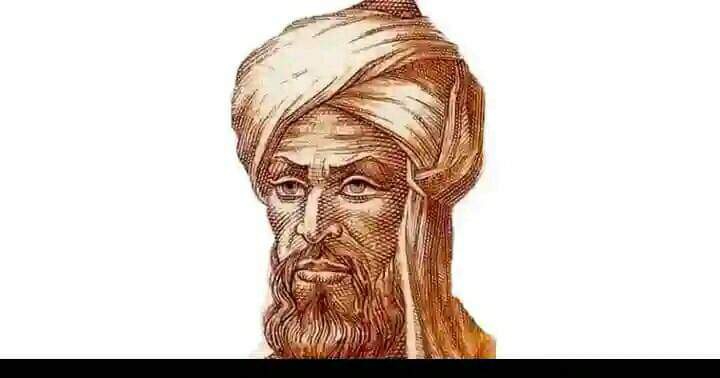
𝙼𝚞𝚑𝚊𝚖𝚖𝚊𝚍 𝚒𝚋𝚗 𝙼𝚞𝚜𝚊 𝚊𝚕-𝙺𝚑𝚠𝚊𝚛𝚒𝚣𝚖𝚒 , also known as Al-Khwarizmi or Al-Khwarizmi, was a Persian mathematician, astronomer, geographer, and scholar who lived in the Islamic Golden Age. He was born around 780 CE in the city of Khwarezm, which is now part of Uzbekistan.
Al-Khwarizmi was a scholar in the House of Wisdom in Baghdad, where he made significant contributions to the development of mathematics, particularly in the fields of algebra and arithmetic. His book “Kitab al-Jabr wa-l-Muqabala” (The Compendious Book on Calculation by Completion and Balancing) introduced a systematic approach to solving linear and quadratic equations and is considered one of the foundational works of algebra.
Al-Khwarizmi also wrote works on astronomy, geography, and cartography. His “Zij al-Sindhind” was a popular astronomical table used for calculating the positions of the sun, moon, and planets. He also developed a method for finding the direction of Mecca for Muslims.
Al-Khwarizmi’s contributions to mathematics and science were instrumental in shaping the intellectual landscape of the Islamic Golden Age and beyond. His name has been immortalized through the word “algorithm,” which is derived from the Latinization of his name.
Al-Khwarizmi made significant contributions to the development of mathematics, particularly in the fields of algebra and arithmetic. Some of his major contributions include:
Algebra: Al-Khwarizmi’s most significant contribution to mathematics was his book “Kitab al-Jabr wa-l-Muqabala” (The Compendious Book on Calculation by Completion and Balancing). In this book, he introduced a systematic approach to solving linear and quadratic equations, and also provided solutions for problems related to inheritance and partitions. This work laid the foundations for the development of algebra as a separate field of mathematics.
Arabic numerals: Al-Khwarizmi introduced the decimal positional number sy

𝐌𝐚𝐭𝐡𝐞𝐦𝐚𝐭𝐢𝐜𝐢𝐚𝐧 𝐨𝐟 𝐭𝐡𝐞 𝐝𝐚𝐲𝙼𝚞𝚑𝚊𝚖𝚖𝚊𝚍 𝚒𝚋𝚗 𝙼𝚞𝚜𝚊 𝚊𝚕-𝙺𝚑𝚠𝚊𝚛𝚒𝚣𝚖𝚒 , also known as Al-Khwarizmi or Al-Khwarizmi, was a Persian mathematician, astronomer, geographer, and scholar who lived in the Islamic Golden Age. He was born around 780 CE in the city of Khwarezm, which is now part of Uzbekistan.Al-Khwarizmi was a scholar in the House of Wisdom in Baghdad, where he made significant contributions to the development of mathematics, particularly in the fields of algebra and arithmetic. His book “Kitab al-Jabr wa-l-Muqabala” (The Compendious Book on Calculation by Completion and Balancing) introduced a systematic approach to solving linear and quadratic equations and is considered one of the foundational works of algebra.Al-Khwarizmi also wrote works on astronomy, geography, and cartography. His “Zij al-Sindhind” was a popular astronomical table used for calculating the positions of the sun, moon, and planets. He also developed a method for finding the direction of Mecca for Muslims.Al-Khwarizmi’s contributions to mathematics and science were instrumental in shaping the intellectual landscape of the Islamic Golden Age and beyond. His name has been immortalized through the word “algorithm,” which is derived from the Latinization of his name.Al-Khwarizmi made significant contributions to the development of mathematics, particularly in the fields of algebra and arithmetic. Some of his major contributions include:Algebra: Al-Khwarizmi’s most significant contribution to mathematics was his book “Kitab al-Jabr wa-l-Muqabala” (The Compendious Book on Calculation by Completion and Balancing). In this book, he introduced a systematic approach to solving linear and quadratic equations, and also provided solutions for problems related to inheritance and partitions. This work laid the foundations for the development of algebra as a separate field of mathematics.Arabic numerals: Al-Khwarizmi introduced the decimal positional number sy

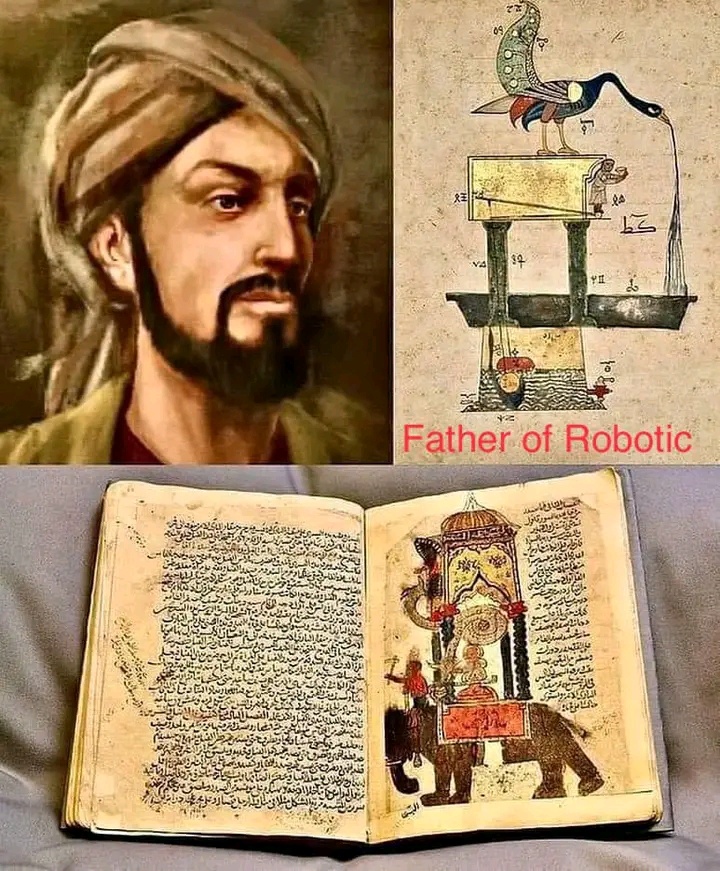
FATHER OF ROBOTICS: ISMAIL AL-JAZARI (1136–1206)Ismail Al-Jazari was a #polymath: a scholar, #inventor, #mechanicalengineer, #artisan, #artist, and #mathematician from the Artuqid Dynasty of Jazira in Mesopotamia. ‘The Book of Knowledge of Ingenious Mechanical Devices’ is a medieval Arabic book written by Ismail al-Jazari in the 12th century. It describes over fifty mechanical devices and automata, including #clocks, #water-raising #machines, musical automatons, and humanoid robots. Al-Jazari provides detailed instructions for constructing each device and includes anecdotes and historical references. The book had a significant influence on the development of European clockmaking and automata, offering insights into daily life and technological innovations in the Islamic world during the medieval period. It’s his book that influenced key concepts of modern-day #robotics.

𝐌𝐚𝐭𝐡𝐞𝐦𝐚𝐭𝐢𝐜𝐢𝐚𝐧 𝐨𝐟 𝐭𝐡𝐞 𝐝𝐚𝐲𝙼𝚞𝚑𝚊𝚖𝚖𝚊𝚍 𝚒𝚋𝚗 𝙼𝚞𝚜𝚊 𝚊𝚕-𝙺𝚑𝚠𝚊𝚛𝚒𝚣𝚖𝚒 , also known as Al-Khwarizmi or Al-Khwarizmi, was a Persian mathematician, astronomer, geographer, and scholar who lived in the Islamic Golden Age. He was born around 780 CE in the city of Khwarezm, which is now part of Uzbekistan.Al-Khwarizmi was a scholar in the House of Wisdom in Baghdad, where he made significant contributions to the development of mathematics, particularly in the fields of algebra and arithmetic. His book “Kitab al-Jabr wa-l-Muqabala” (The Compendious Book on Calculation by Completion and Balancing) introduced a systematic approach to solving linear and quadratic equations and is considered one of the foundational works of algebra.Al-Khwarizmi also wrote works on astronomy, geography, and cartography. His “Zij al-Sindhind” was a popular astronomical table used for calculating the positions of the sun, moon, and planets. He also developed a method for finding the direction of Mecca for Muslims.Al-Khwarizmi’s contributions to mathematics and science were instrumental in shaping the intellectual landscape of the Islamic Golden Age and beyond. His name has been immortalized through the word “algorithm,” which is derived from the Latinization of his name.Al-Khwarizmi made significant contributions to the development of mathematics, particularly in the fields of algebra and arithmetic. Some of his major contributions include:Algebra: Al-Khwarizmi’s most significant contribution to mathematics was his book “Kitab al-Jabr wa-l-Muqabala” (The Compendious Book on Calculation by Completion and Balancing). In this book, he introduced a systematic approach to solving linear and quadratic equations, and also provided solutions for problems related to inheritance and partitions. This work laid the foundations for the development of algebra as a separate field of mathematics.Arabic numerals: Al-Khwarizmi introduced the decimal positional number sy

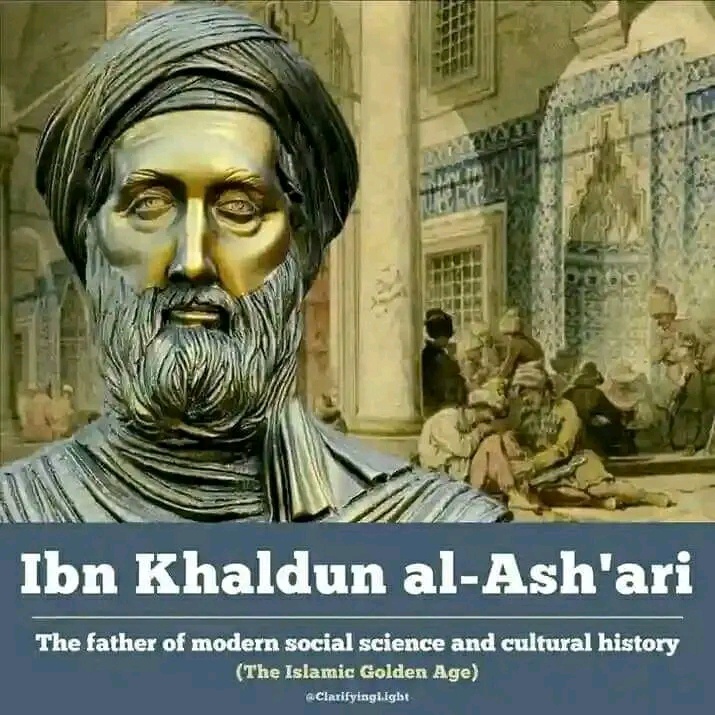
Ibn Khaldun 🇹🇳 (27 May, 1332, Tunisia)was an Arab sociologist, philosopher, and historian widely acknowledged to be one of the greatest social scientists of the Middle Ages. He is considered by many to be the #father of historiography, sociology, economics, and demography studies.

He made major contributions in the areas of historiography, sociology, economics, and demography.

He also achieved high political office, serving as Prime Minister of Egypt, and saw active military service.

He is best known for his Muqaddimah (Prolegomena), the first book of his world history that won him an immortal place among historians, sociologists, and philosophers.

Ibn Khaldun also spent nearly two months in the company of Timur, the founder of the Timurid Empire who treated him with respect.

The scholar used his years of accumulated knowledge and wisdom.

He is generally considered the greatest Arab historian as well as the father of sociology and the science of history.

Dr. Yosri HADDAD